First fingerlings delivered to the cooperative's pilot site
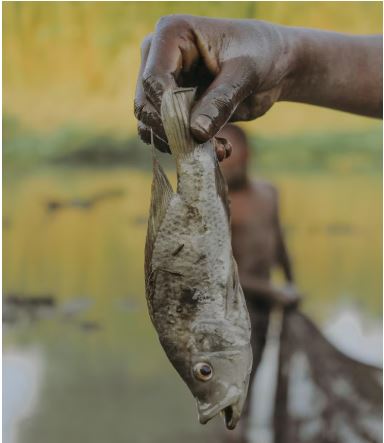
The experimental site allows for testing the integrated model: production, training, and supply of inputs all within the same area.
A site to test the complete model
The pilot site brings together on the same perimeter the three links that we consider inseparable: fish production, training of cooperative members, and the supply of inputs, fingerlings, and feed. The goal is simple: to verify, on a real scale, that each link holds up, and that the cooperative will eventually be able to operate the whole thing without us.
Selected fingerlings, local feed
The fingerlings delivered come from strains selected for their rapid growth. They are fed with locally produced feed adapted to each growth phase, which reduces dependence on inputs from elsewhere and keeps the added value on site.
Weekly monitoring
Throughout the cycle, a technician visits every week to check water quality and pond density. At harvest, the fish will be calibrated and weighed in front of the cooperative, then transported to the market via a cold chain.
The cooperative allows us to buy feed together and negotiate a better price. On our own, we would never have obtained these terms from suppliers.
Furaha, cooperative president in Beni
Next steps
The lessons learned from the pilot site will be used to expand the model to other cooperatives. To learn more: our area Community fish farming and the project Food security and resilience.
Read also

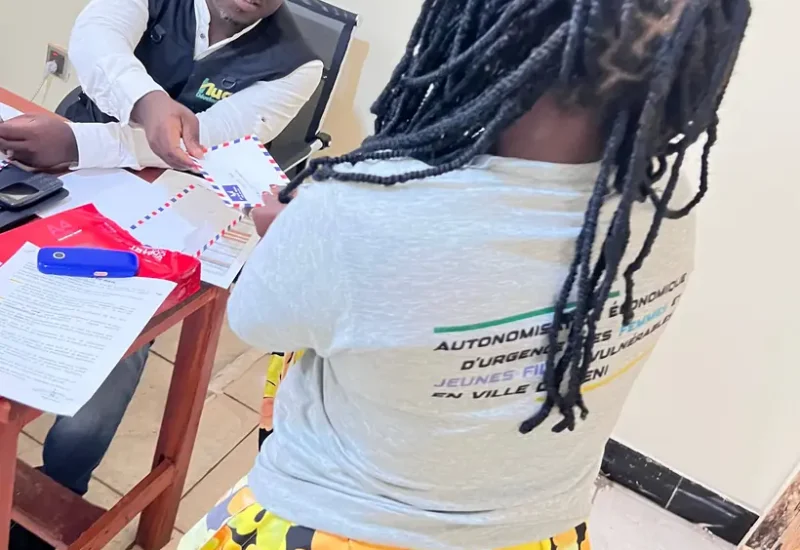
Awarding of seed capital to 27 women and young girls
Each left with a premises, initial stock, and a monitoring logbook, following the signing and filing of their lease agreement.
Beni 2 min read Read the article
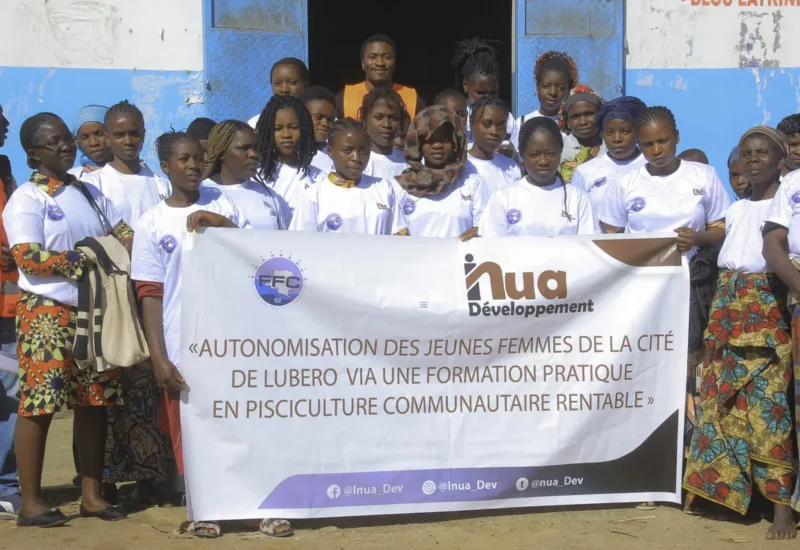
Twenty-five young women from Lubero complete their fish farming training
Six weeks of practice in community ponds: dyke maintenance, stocking, feeding, water quality, and harvesting calibration.
Lubero 2 min read Read the article
Comments
No comments yet. Share your reaction or question.